Designing the STARMAST VIP

PGCAP guest lecture

Tom Coleman

2026-09-07

About me

  • Lecturer (Education Focused) in the School of Mathematics and Statistics

  • first in my family to go to university (MMath and PhD at UEA)

  • enjoys cricket, coffee, and crosswords

  • contact me at tdhc@st-andrews.ac.uk

Context

Problem

need for accessible and inclusive maths/stats resources

  • traditional textbooks can be difficult to parse for non-specialists, technically inaccessible, expensive, intimidating…

  • diverse backgrounds: every country has their own curriculum, language; Masters courses attract wide backgrounds of students…

  • lack of local support: minimal central maths/stats support at institution

  • increased need for competency in maths/stats

Solution

  • creating a free-to-use, high-quality bank of inclusive and technically accessible learning resources in mathematics and statistics, suitable for everyone

  • in addition, involving students gives learners agency in their resource creation, teaches transferable skills not often found in maths and stats degrees, obtains diverse perspectives on learning…

  • end product: STARMAST (starmast.org) - St Andrews Resources in Mathematics and Statistics

Problems in solution

  • how to involve students?
    • money? (difficult)
    • volunteering? (unfair)
    • learning experience via a module (best)
  • if a module, how to make it the best possible for the students?
    • want students to enrol
    • want students to engage
    • want students to succeed
    • want an impact on students beyond a number at the end

Module design

VIP mechanism

Vertically Integrated Project:

  • multi-year, multi-semester ongoing research project (with some leeway)

  • students in any year can apply to single projects

  • awards module credits, and students get a grade for their work

  • allows students to participate in the same project across multiple years

VIP ILOs

  • function as a contributing and accountable member of a multidisciplinary team and to value the contributions and feedback from team members with diverse disciplinary backgrounds through peer-to-peer mentoring.

  • apply self-management skills including taking responsibility, meeting deadlines, time management, self-organisation and reflection in pursuing personal and team goals.

  • demonstrate research skills including project management, task planning and execution, professional ethics, handling unexpected challenges, presentation and communication in a collaborative context.

  • display leadership skills including taking initiative, delegation, goal setting, prioritisation and motivating others.

  • contribute to a project using disciplinary knowledge and expertise at the appropriate level of difficulty.

Our VIP

  • small group, weekly meetings, hands-on supervisor involvement

  • attracting wide range of students

    • mathematicians, statisticians, economists, cell biologists, computer scientists, art historians…
    • from first-years to final years
  • assessment: 20% fortnightly reflective logs, 30% posters and group presentation, 50% final portfolio and reflective report

What do students do on the project

  • website backend: domain name, security, search engine optimisation, hosting, custom website style, cookies, analytics, feedback boxes, emails, mailing list, progress trackers, in-house content organisation…

  • branding and marketing: colour scheme, logo, outreach plans, social media, ads and posters…

  • accessibility work: automatic narration of guides, interactive figures (using html and R Shiny live), built-in graphical calculators (desmos), full accessibility audit

  • content: guides / overviews / explorations on algebra, geometry, calculus, stats, and many more…

Project specific learning

  • awareness of digital accessibility tools and challenges that students with disabilities have in learning

  • ability to produce long-form writing of mathematical and statistical topics to a general audience

  • development of presentation skills, with emphasis on accessible and inclusive design

  • emphasis on teamwork and moving towards a common goal

(important to say these are goals not usually found in standard MT modules!)

Alignment

  • 20% reflective logs and 10% final reflective report satisfy VIP ILOs

  • 30% group poster / oral presentation a little of both

  • 40% final portfolio definitely mine!

Challenges and successes

What could be better?

  • quality of written outputs can be inconsistent

    • increased staff time for quality control
  • potential duplication of assessment modes for returning students

  • some student group friction at times

What’s gone well?

  • time for project to breathe and for a team to form

  • nature of VIP allows for development of big ideas across semesters and years

  • excellent student buy-in to an impactful and meaningful project

  • high student satisfaction, both with those who create the resources and those who use the resources

  • good integration of interdisciplinary skills

  • outstanding range of outputs

VIP outputs from students

  • interactive figures: using Desmos API, R Shiny, and html - responsibly using generative AI to help
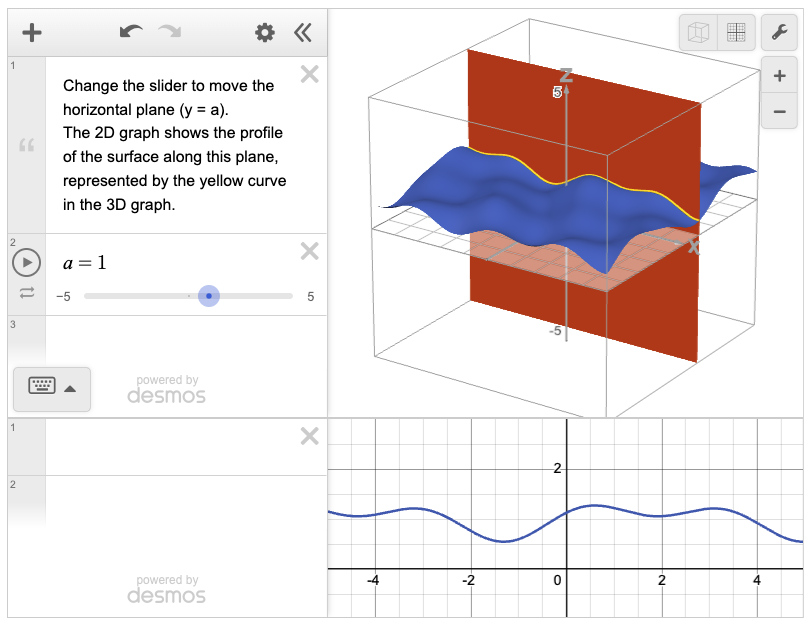
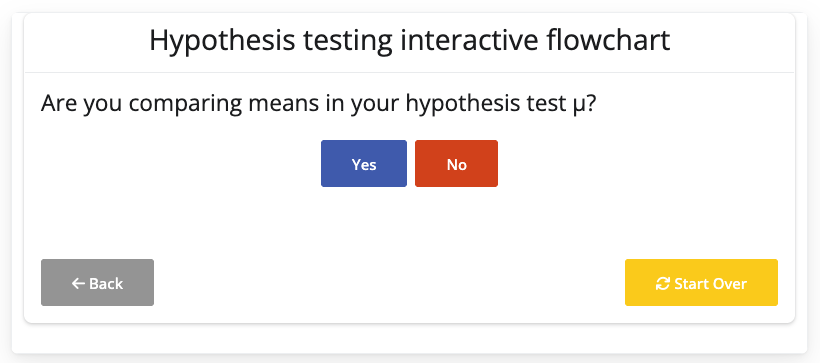
Desmos figure from Guide: Introduction to partial differentiation, written by a fourth-year student

R Shiny interactive figure from Guide: Introduction to hypothesis testing, written by a fourth-year student

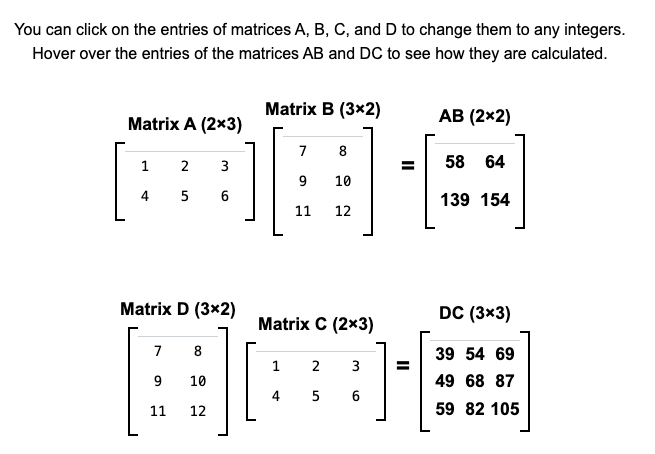
html interactive figure from draft of Guide: Introduction to matrices, written by a fourth-year student

VIP outputs from students

  • content: guides on algebra, geometry, calculus, stats…

  • accessibility work: discussions with disability charities, investigating multiple Quarto themes, mp3 narration of guides
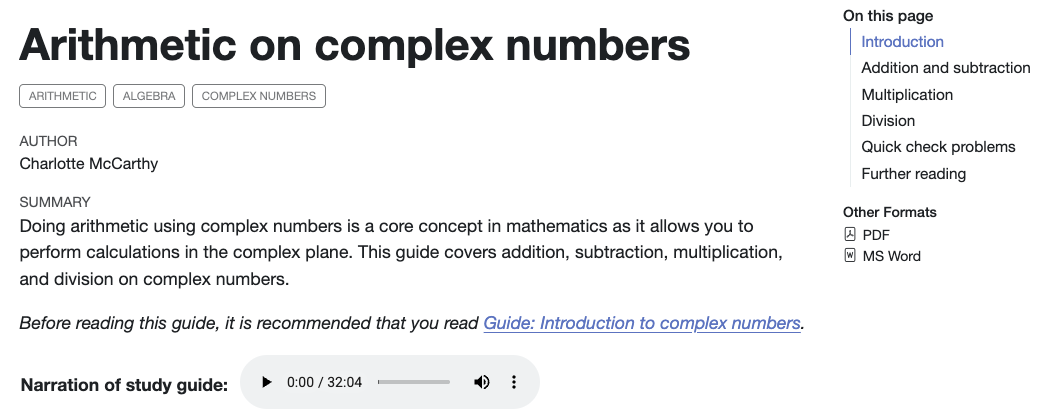
Top of Guide: Arithmetic on complex numbers

VIP outputs from students

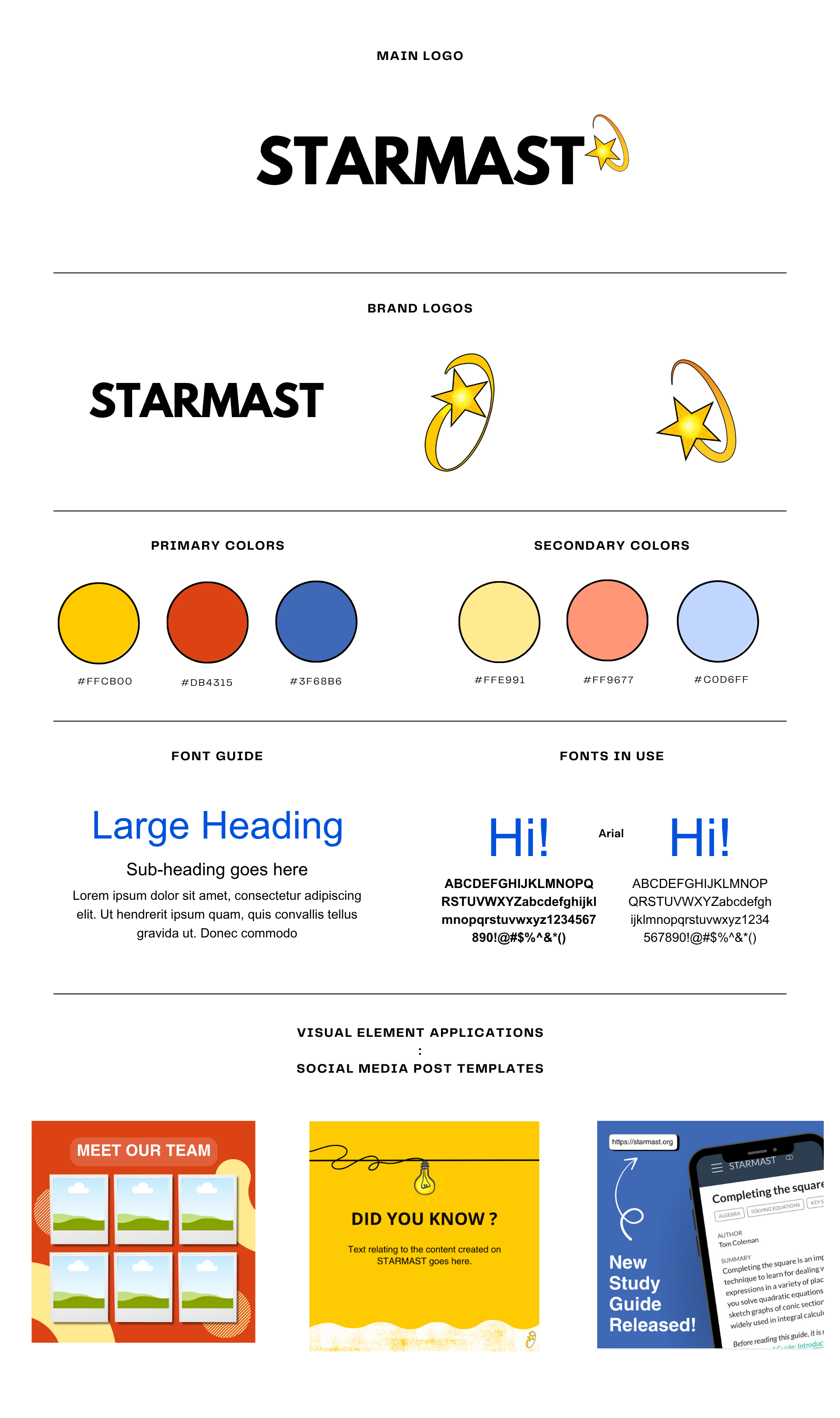
Initial STARMAST brandkit

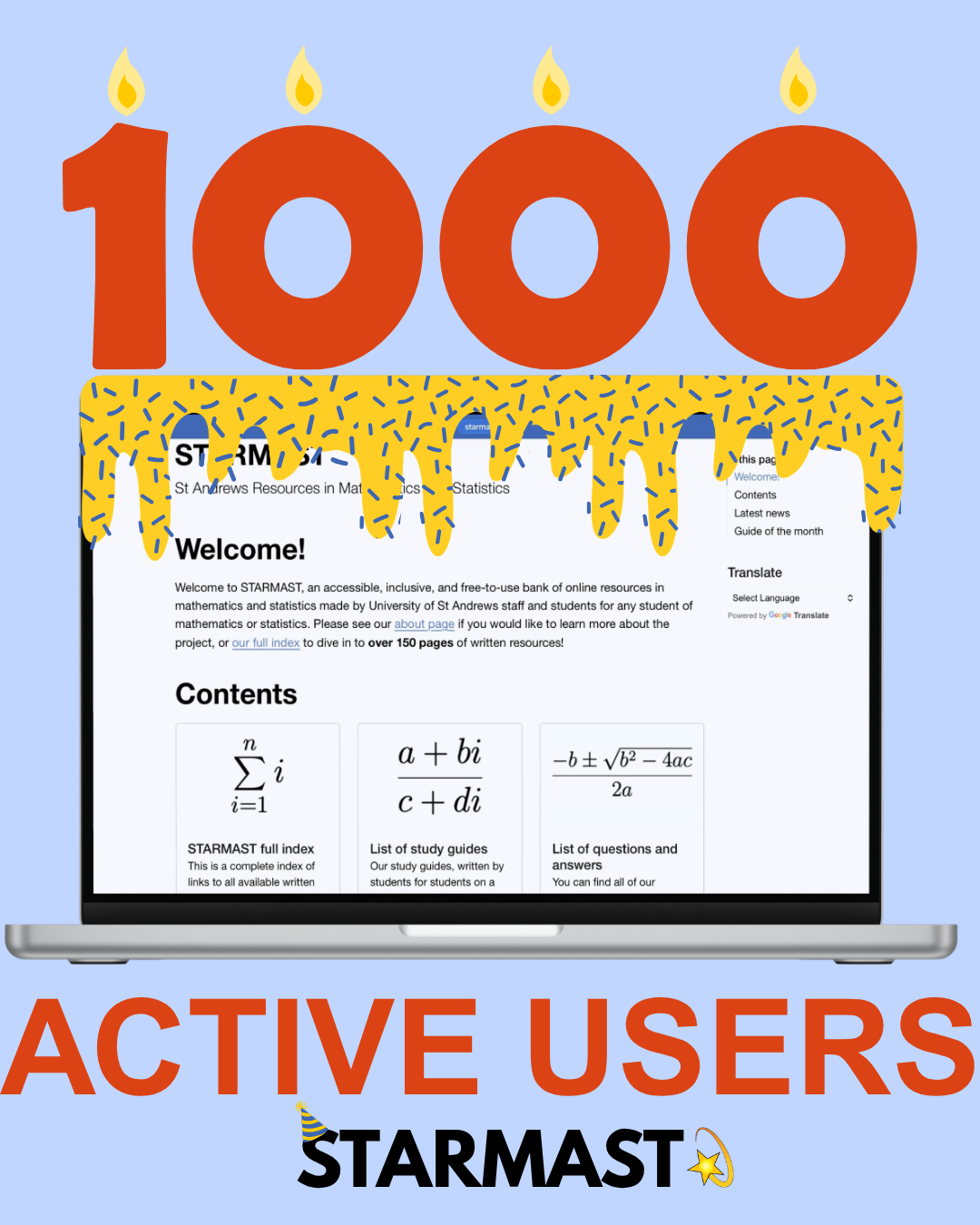
Insta post for 1000 users

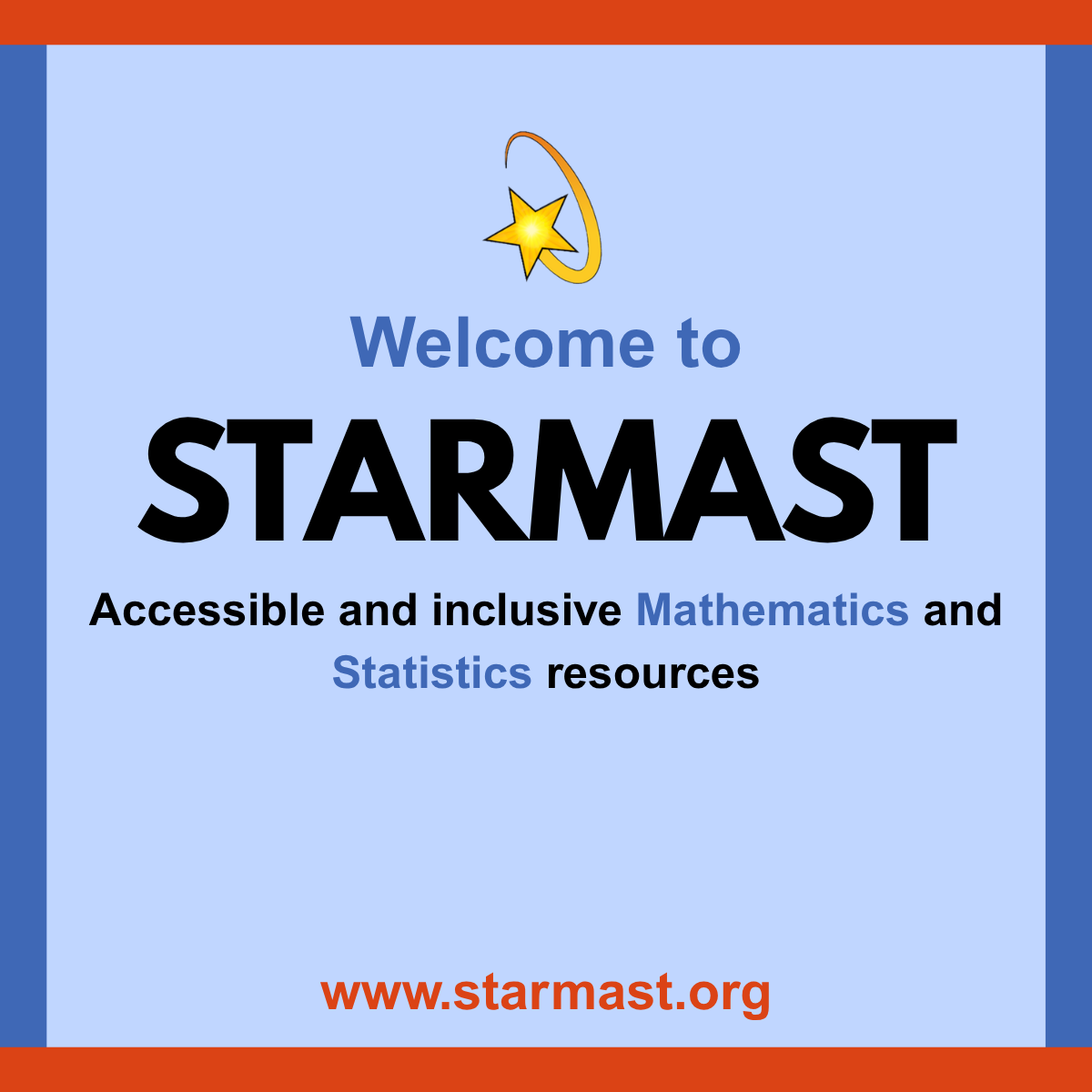
Inaugural LinkedIn post

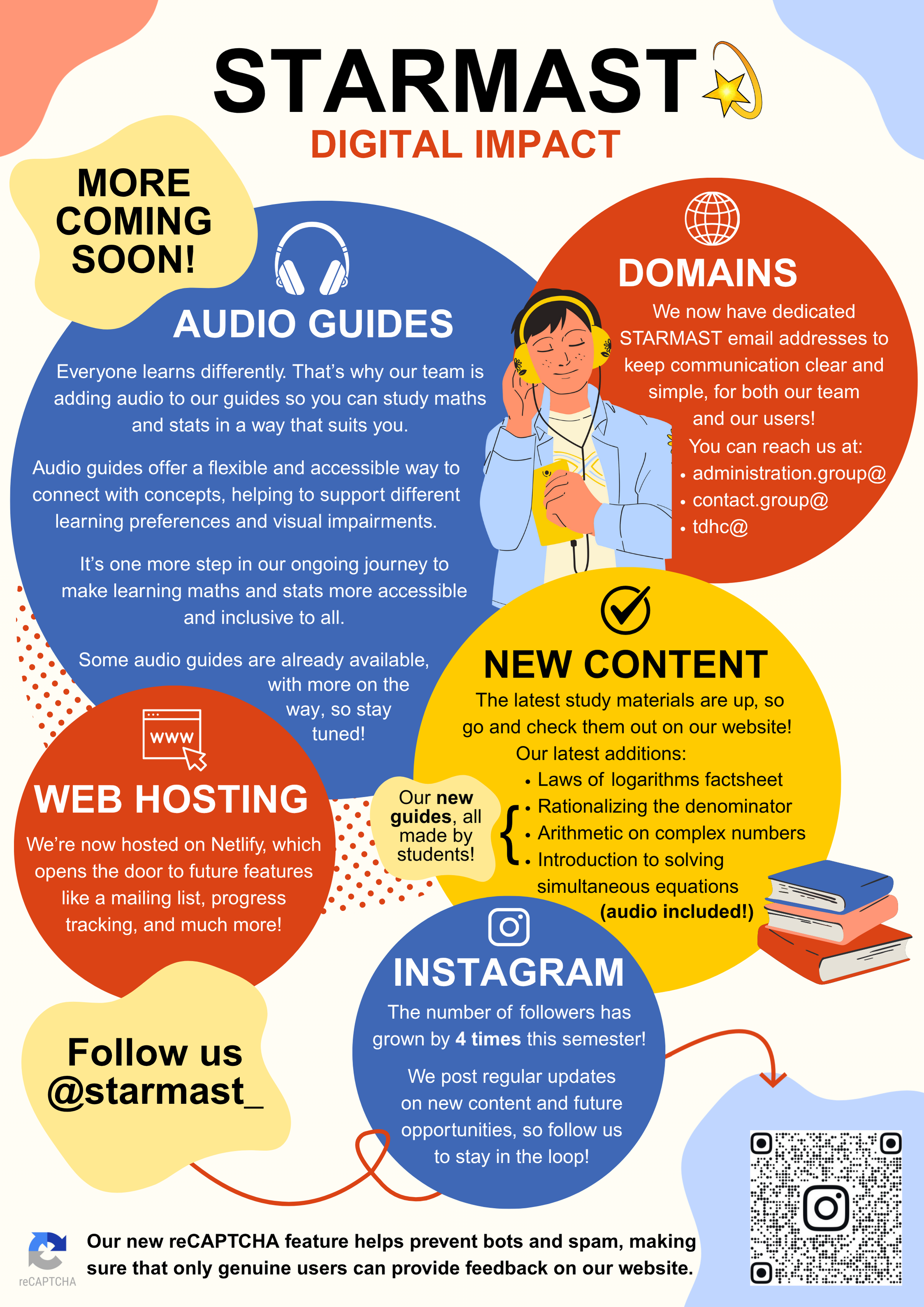
Digital impact poster

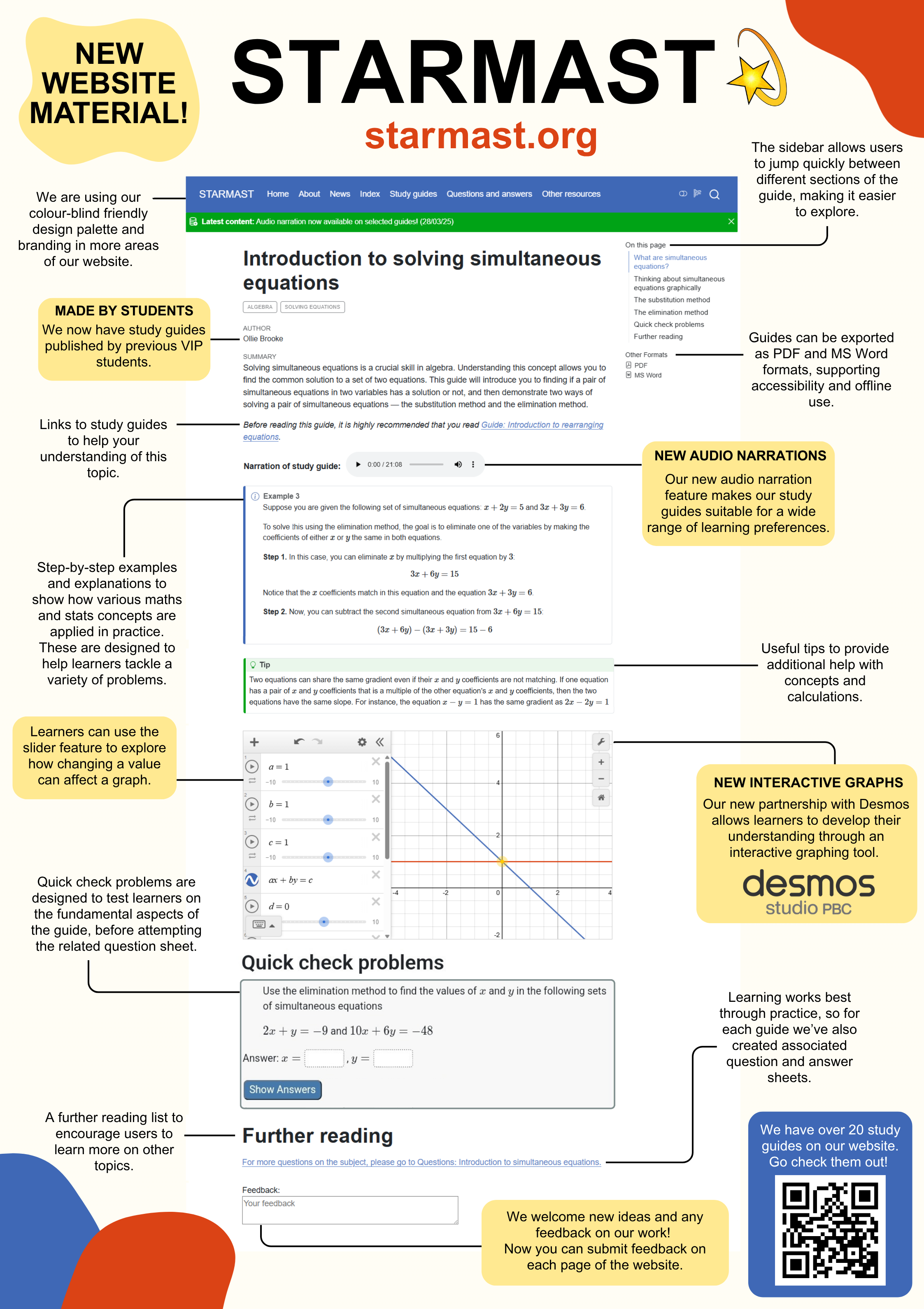
Annotated guide poster

Ad

VIP outputs from students

  • website backend: domain name, security, search engine optimisation, hosting, custom website style, cookies, analytics, feedback boxes, emails, mailing list, progress trackers…
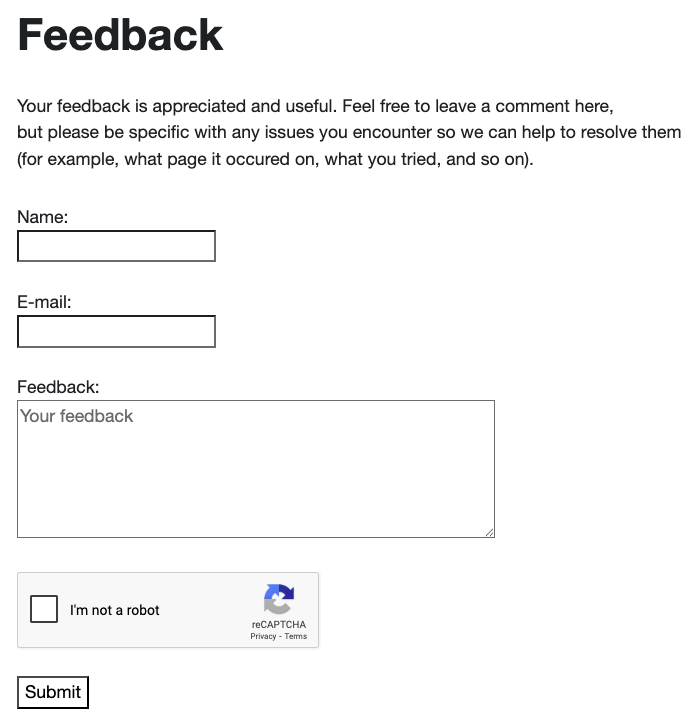
Feedback box written by a second-year and final year student

Impact of STARMAST project

  • now the University’s central hub for maths and stats support

  • 1200 users in the past calendar year, with over 8000 website hits

  • resources used in four Schools in the University, with more to follow

  • expertise obtained in developing accessible materials used in several University Schools

  • case study published in MSOR Connections

thanks!


thank you for listening!


get in touch with me at tdhc@st-andrews.ac.uk if you’d like